

HD 16 Channel IPTV Encoders: The Complete Professional Guide
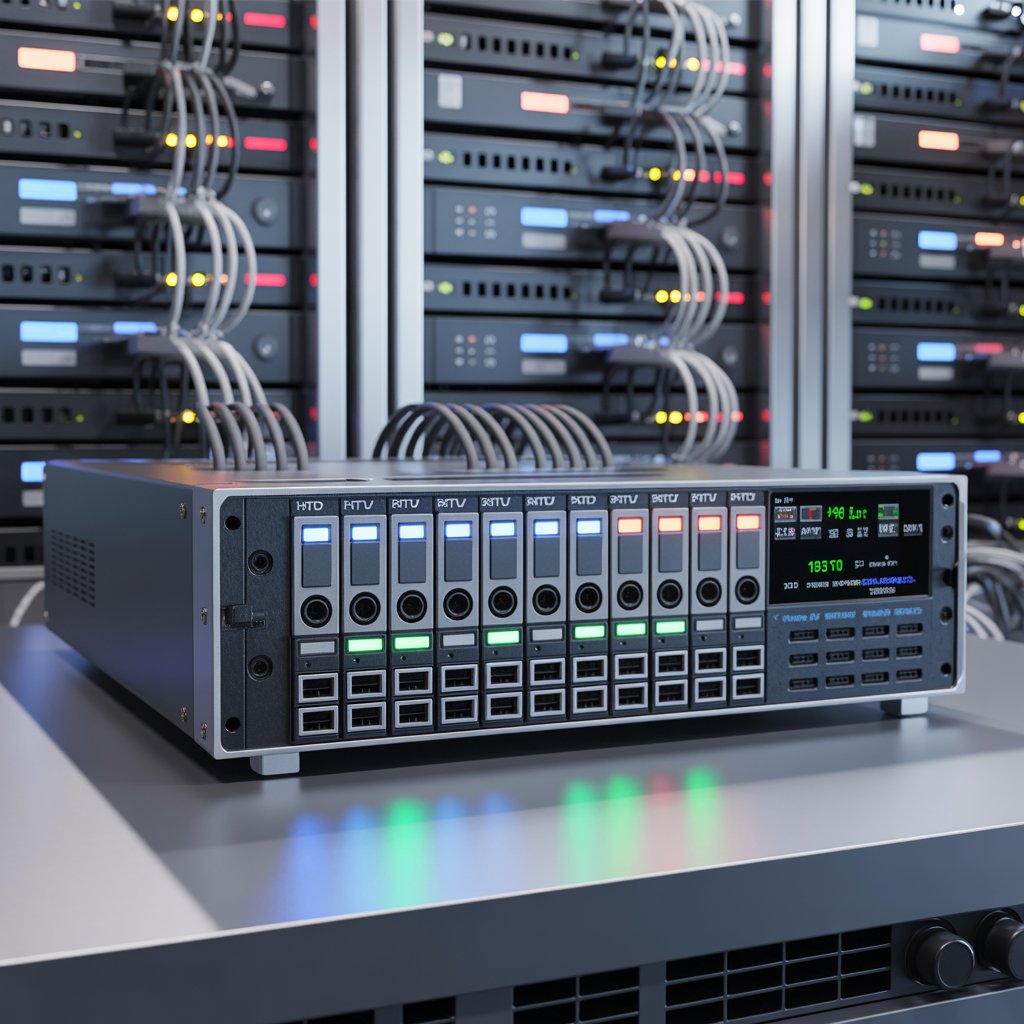
HD 16 Channel IPTV Encoders: The Complete Professional Guide
Quick definition:
HD 16 channel IPTV encoders are multi-input hardware devices that convert up to 16 HD video sources into compressed IPTV streams (H.264/H.265) for distribution over LAN, CDN or OTT platforms.
If you operate a broadcast facility, hotel IPTV system, campus network, or IPTV service, hd 16 channel iptv encoders give you the ability to ingest, compress, and deliver sixteen high-definition video channels from a single rack-mounted device. These encoders centralize multi-channel streaming workflows, reduce rack space, and improve manageability compared with deploying many single-channel units.
Tone: Professional · Read time: ~14 minutes
Why HD 16 Channel IPTV Encoders Matter for Modern Streaming
The rise of IPTV and live OTT services means operators need hardware that balances quality, efficiency, and management. HD 16 channel IPTV encoders are built to handle multiple simultaneous feeds with professional reliability, making them ideal for hotels, stadiums, casinos, schools, and broadcasters.
Key advantages of using hd 16 channel iptv encoders include reduced total cost of ownership, smaller data center footprint, fewer points of failure, and easier remote administration.
Core benefits at a glance
- Encode 16 HD sources simultaneously (HDMI/SDI/AV depending on model).
- Support for H.265 and H.264 codecs to balance bandwidth vs compatibility.
- Multiple output protocols (HLS, RTMP, RTSP, UDP/Multicast, HTTP-TS).
- Centralized web management and monitoring dashboard.
How HD 16 Channel IPTV Encoders Work
At a high level, a hd 16 channel iptv encoders unit performs three stages: capture, compress, and distribute.
1. Capture (Inputs)
The encoder accepts up to sixteen inputs—commonly HDMI or SDI—though some models include mixed inputs. Each input is treated independently so you can ingest cameras, satellite receivers, set-top boxes, or playback servers simultaneously.
2. Compress (Codec & Processing)
After capture, each channel is compressed using H.264 (AVC) or H.265 (HEVC). Modern hd 16 channel iptv encoders offer per-channel bitrate control (CBR/VBR), frame rate settings, and scalable resolution options (720p, 1080p).
3. Distribute (Protocols & Outputs)
Finally, streams are packaged and delivered via industry protocols. Typical outputs include HLS for web delivery, RTMP for push streaming to platforms, RTSP for local players, and UDP multicast for IPTV middleware distribution.
Typical Applications for HD 16 Channel IPTV Encoders
Organizations adopt hd 16 channel iptv encoders when they need stable multi-channel streaming. Common use cases:
- Hotels & Hospitality — centralized live TV, in-room IPTV, channel management.
- Education — lecture capture, campus channels, digital signage.
- Broadcast & OTT — ingest multiple program feeds into playout and CDN systems.
- Security — convert multiple surveillance camera outputs to streamable channels.
- Live events & sports venues — multi-camera feeds, replays, in-venue screens.
Key Features to Compare When Choosing an HD 16 Channel IPTV Encoder
When evaluating models, you should look closely at the following specs. These are the decision drivers for most professional buyers of hd 16 channel iptv encoders.
Codec Support (H.265 vs H.264)
H.265 (HEVC) is significantly more bandwidth-efficient than H.264—often reducing bitrate needs by 30–50% for similar perceptual quality. However, H.264 remains more universally compatible with legacy devices. Choose hd 16 channel iptv encoders that support both if you need flexibility.
Input Types and Modularity
Confirm whether the unit supports the physical inputs your environment uses: HDMI, SDI, analog CVBS, or network-based SRT/RTP inputs. Some vendors offer modular I/O cards so you can adapt to future needs.
Protocol Flexibility
A modern hd 16 channel iptv encoders should be able to output multiple protocol types simultaneously—e.g., HLS + UDP + RTMP—so the same device can feed both CDN endpoints and local middleware.
Useful resources: [Link to related article on IPTV server setup] · [Link to guide on choosing H.265 vs H.264 encoders] · [Link to WHO report on digital media consumption]
Performance Considerations
Performance for hd 16 channel iptv encoders depends on three major areas: codec efficiency, network capacity, and cooling/power reliability.
Bitrate Planning
Typical bitrate guidance:
- 1080p H.265: 2–4 Mbps per channel (good quality)
- 1080p H.264: 4–8 Mbps per channel (good quality)
- 720p H.265: 1.2–2.5 Mbps per channel
For a full rack-mounted hd 16 channel iptv encoders running 16 × 1080p H.265 at 3 Mbps each, plan for ~48 Mbps of sustained egress per device, plus overhead for manifests and control channels.
Network & Redundancy
Dual LAN ports, VLAN support, and failover routing are common enterprise features — choose an encoder that supports redundant network topologies to avoid single points of failure.
Setting Up Your HD 16 Channel IPTV Encoder: Step-by-Step
Below is a concise workflow you can follow to deploy a hd 16 channel iptv encoders in production.
- Rack-mount the encoder and connect reliable power with UPS/backup power.
- Connect each source to the appropriate input ports (label everything).
- Assign a static IP and log into the web management interface.
- Configure channel profiles: codec, resolution, bitrate, audio settings.
- Set output protocols and target URLs (middleware, CDN, or local players).
- Run pre-launch tests for each channel (audio/video sync, drift, frame loss).
- Monitor real-time dashboards and set alerting thresholds for bitrate drops or link loss.
Troubleshooting Common Problems
Problems occasionally crop up in multi-channel encoding environments. Here are quick checks that resolve most issues with hd 16 channel iptv encoders.
Black Screen or No Signal
- Check physical cable and input selection.
- Verify source resolution is within encoder-supported range.
- Look for HDCP or copy-protection on consumer set-top boxes.
Audio Missing or Out of Sync
- Confirm audio format (AAC vs AC3) compatibility with destination players.
- Check audio sample rates and embedded audio routing in the encoder UI.
Buffering or High Latency
- Reduce per-channel bitrate or switch to H.265 for bandwidth savings.
- Check network congestion and QoS settings.
Enterprise Management & Monitoring
For teams operating hd 16 channel iptv encoders at scale, advanced management features matter:
- Multi-user role-based access control
- SNMP and syslog integration
- API for automation and provisioning
- Centralized firmware update tools
Comparing HD 16 Channel IPTV Encoders to Other Options
It helps to compare 16-channel hardware encoders to alternatives:
Single-channel hardware encoders
Single-channel units can be cheaper per device but quickly become costly and complex at scale. A single hd 16 channel iptv encoders reduces management overhead and rack space.
Software encoders (PC/server-based)
Software encoders are flexible but depend on general-purpose servers and can require more maintenance. For continuous 24/7 multi-channel operations, hardware hd 16 channel iptv encoders typically deliver better reliability and lower latency.
Checklist: What to Ask Before You Buy
Use this buyer checklist to evaluate vendors of hd 16 channel iptv encoders.
- Does it support H.265 and H.264 simultaneously?
- What physical inputs are included and are they modular?
- Can the device output multiple protocol types at the same time?
- Is the web UI and API documented and secure?
- What warranty and support SLAs does the vendor provide?
- Are firmware updates straightforward and non-disruptive?
Case Study: Example Deployment
A mid-sized hotel upgraded from individual single-channel encoders to a single hd 16 channel iptv encoders device. The result:
- Reduced rack space by 70%
- Lower monthly power usage
- More reliable channel sync for on-demand content
Cost Considerations & ROI
Upfront cost is higher for a 16-channel professional encoder vs one or two single-channel boxes, but total cost of ownership (TCO) tends to be lower when factoring:
- Reduced maintenance and management labor
- Lower electricity and cooling needs
- Fewer spare parts and simpler spares policy
Future-Proofing Your Investment
Choose hd 16 channel iptv encoders with firmware update support, modular I/O cards, and multi-codec support. This allows you to adapt to new codecs, protocols, or integration requirements without replacing the entire unit.
Security Best Practices
Because encoders are networked devices, secure them:
- Place them on a dedicated VLAN and use firewall rules.
- Use HTTPS for web UI and change default passwords.
- Disable unused services and keep firmware patched.
Vendor & Product Research (Placeholders)
For product comparisons, consult these resources:
- [Link to vendor comparison: 16-channel hardware encoders]
- [Link to related article on streaming protocols]
- [Link to external industry research on IPTV growth]
Frequently Asked Questions (FAQ)
How many simultaneous outputs can a typical HD 16 channel IPTV encoder produce?
Many models support multiple simultaneous protocols per channel (for example HLS + RTMP + UDP), so the same encoded channel can be delivered to streaming platforms and local middleware at the same time.
Is H.265 required?
H.265 is not strictly required but strongly recommended when bandwidth is limited. Use H.264 when compatibility with older decoders is a requirement.
Can I mix input types (HDMI and SDI) on one device?
Some manufacturers offer hybrid or modular input cards; confirm with the vendor. Mixing inputs on a single hd 16 channel iptv encoders saves on extra converters.
Conclusion: Is an HD 16 Channel IPTV Encoder Right for You?
If you manage environments that require multiple simultaneous HD streams—hotels, campuses, broadcasters, or service providers—a professional hd 16 channel iptv encoders is a smart investment. It simplifies operations, reduces TCO, and supports robust delivery options across LAN, CDN, and OTT endpoints.
Choose units with flexible codec support, modular I/O, strong remote management, and enterprise-level redundancy to ensure a smooth, long-term deployment.
Subscribe for more IPTV hardware reviews
Questions about implementing hd 16 channel iptv encoders? Contact our team or leave a comment below.
