

HD IPTV Headend Encoders: The Complete Professional Guide for Modern Streaming Networks
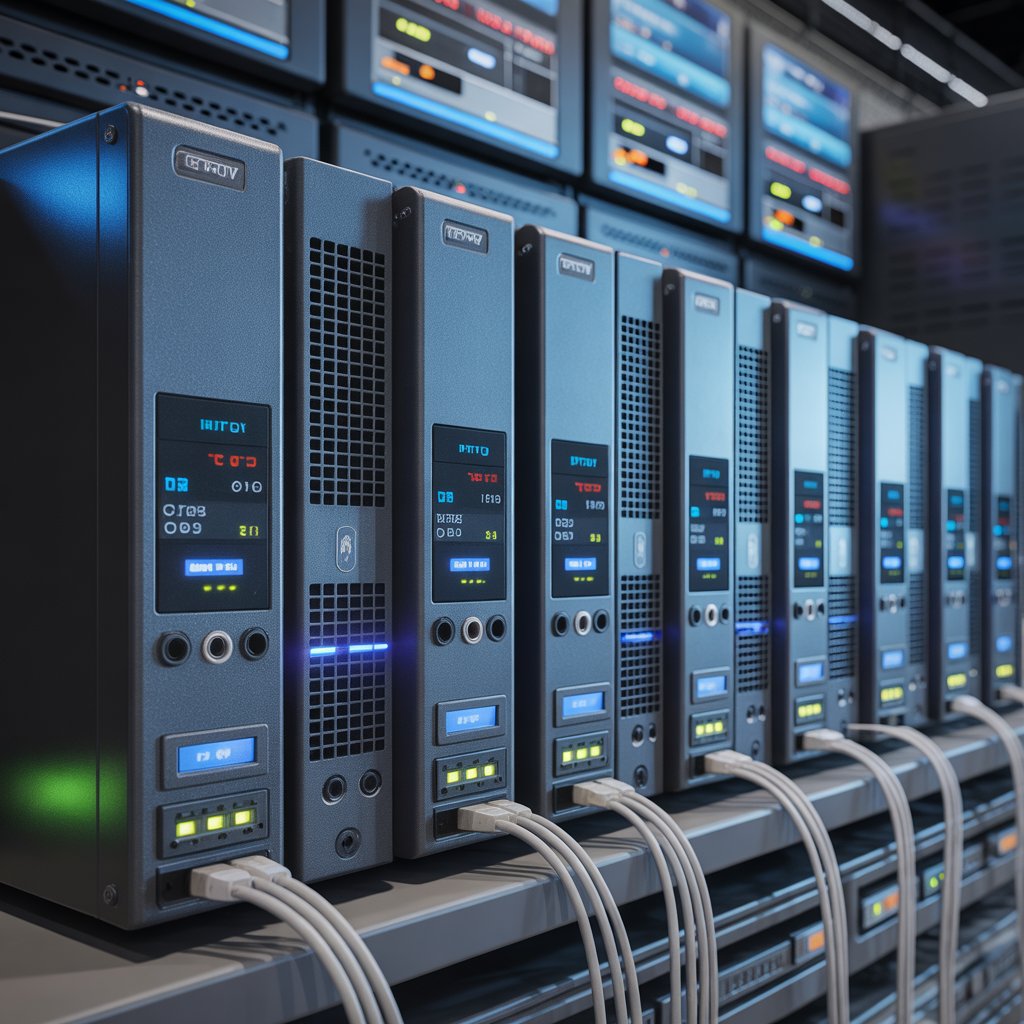
HD IPTV Headend Encoders: The Complete Professional Guide for Modern Streaming Networks
“`
If you are planning, upgrading, or optimizing a streaming deployment, understanding hd iptv headend encoders is essential. These devices — whether hardware appliances or software services — sit at the headend and transform raw video inputs into efficient IP streams. In this guide we explain how hd iptv headend encoders work, their key features, real-world applications, and how to choose the right model for hotels, ISPs, enterprises, and broadcasters.
In this article
- What are hd iptv headend encoders?
- How hd iptv headend encoders work (step-by-step)
- Types and form factors of hd iptv headend encoders
- Key features and benefits
- How to choose the right hd iptv headend encoders
- Deployment examples and best practices
- Future trends for hd iptv headend encoders
- FAQs and resources
What are HD IPTV Headend Encoders?
HD IPTV headend encoders are specialized encoder units or software that ingest video/audio from sources like HDMI, SDI, ASI, or RF and convert them into compressed IP streams suitable for IPTV distribution. They are installed in the headend — the core location where all channels are ingested, processed, and aggregated for delivery to viewers.
In professional environments, hd iptv headend encoders ensure consistent picture quality, efficient bandwidth utilization, and compatibility with middleware and set-top boxes. These encoders typically support modern codecs (H.264, H.265), adaptive bitrate streaming, and a range of transport protocols.
Why HD IPTV Headend Encoders Matter
Choosing the right hd iptv headend encoders determines your service quality. The encoder affects latency, channel density, CDN and multicast behavior, DRM compatibility, and overall cost of ownership. Poor encoding decisions can cause buffering, poor picture quality, and expanded bandwidth bills.
Conversely, the right hd iptv headend encoders deliver crisp HD streams, efficient multicast on local networks, and powerful integrations with middleware and CDN origin servers.
How HD IPTV Headend Encoders Work — Step by Step
The encoding workflow is straightforward but technical. At the headend, hd iptv headend encoders follow a predictable pipeline:
- Signal ingestion: Accept inputs (HDMI/SDI/ASI/RF).
- Pre-processing: Color space conversion, deinterlacing, scaling.
- Compression: Encode with H.264 or H.265 using VBR or CBR.
- Packetization: Wrap compressed frames into RTP/UDP/HLS segments.
- Delivery: Push to CDN, multicast, origin servers, or middleware.
Every stage is governed by the encoder logic, and high-end hd iptv headend encoders expose configuration for bitrate ladders, GOP size, closed captions, audio channels, and metadata.
Types of HD IPTV Headend Encoders
When evaluating hd iptv headend encoders, you’ll encounter multiple types:
- Hardware encoders: Purpose-built appliances for 24/7 operation and low latency.
- Software encoders: Virtualized or cloud-based encoders that scale horizontally.
- Multi-channel encoders: Rack-mount devices supporting many concurrent channels (8, 16, 32, 64+).
- Edge/mini encoders: Small HDMI-to-IP devices deployed at remote locations or venues.
Each category of hd iptv headend encoders has use-cases: hardware for reliability, software for flexibility, multi-channel for dense headends, and edge encoders for local capture.
Hardware vs Software HD IPTV Headend Encoders
Hardware hd iptv headend encoders are optimized for throughput and heat dissipation, often with dedicated ASICs or FPGA logic. Software encoders rely on CPU/GPU and are easy to update, scale, and deploy in cloud-based topologies.
Key Features to Look for in HD IPTV Headend Encoders
Professional hd iptv headend encoders should offer:
- HEVC/H.265 support — improved compression and bandwidth savings.
- Low latency modes — critical for live sports and interactions.
- Adaptive Bitrate (ABR) — HLS/DASH for varied devices.
- Multi-protocol output — HLS, RTMP, SRT, RTP, UDP multicast.
- Robust management UI & API — remote control and automation.
- Redundancy & failover — hot spare or multi-path streaming.
- DRM integration — Widevine/PlayReady/FairPlay where needed.
- Closed captions & subtitling — support for multiple languages.
Benefits of Using HD IPTV Headend Encoders
Investing in the right hd iptv headend encoders brings measurable benefits:
- Lower bandwidth costs through H.265 efficiency.
- Improved viewer experience — fewer stalls, better picture.
- Higher channel density — more streams per rack unit.
- Future-proofing with modern codecs and ABR.
- Operational stability for 24/7 broadcasting.
How to Choose the Right HD IPTV Headend Encoder
Choosing hd iptv headend encoders depends on a checklist of requirements. Use the following decision guide:
1. Channel Capacity
Estimate the number of simultaneous channels. If you require many live feeds, choose multi-channel hd iptv headend encoders (16/32/64). For small deployments, single or 4-channel units may suffice.
2. Input Types & Flexibility
Confirm support for HDMI, SDI, ASI, and legacy analog inputs if required. Hybrid input support lets hd iptv headend encoders handle diverse sources.
3. Codec Support and Bitrate Control
Prefer encoders with H.264 and H.265 support and both CBR and VBR modes. Effective bitrate control helps manage CDN costs.
4. Protocols & Middleware Compatibility
Ensure it supports HLS for mobile, SRT for secure contribution, and UDP multicast for LAN distribution. Most middleware and STB stacks are compatible with these modern protocols; check your hd iptv headend encoders compatibility matrix.
5. Management, Monitoring, and APIs
Look for web UIs, SNMP, and restful APIs to integrate hd iptv headend encoders into automation workflows and monitoring systems.
6. Redundancy and Reliability
For mission-critical services, redundant encoders and failover features are essential. Verify MTBF and manufacturer support for sustained 24/7 operation.
7. Cost and Total Cost of Ownership
Factor hardware cost, maintenance, power consumption, and software licenses. High-quality hd iptv headend encoders often deliver lower TCO over five years due to reliability and efficiency.
Deployment Examples & Best Practices
Here are common deployments where hd iptv headend encoders shine:
Hospitality (Hotels & Resorts)
Hotels use hd iptv headend encoders to centralize content for room TVs, digital signage, and multi-lingual channels. ABR profiles ensure mobile devices and in-room TVs play smoothly.
Healthcare
Hospitals rely on stable hd iptv headend encoders for patient entertainment, staff training, and closed-circuit displays. Low latency and robust audio are important.
Education & Corporate
Universities and enterprises use hd iptv headend encoders for lecture capture, town-halls, and internal channels. Cloud-based encoders offer easy scaling for peak events.
ISP & Telco Headends
ISPs deploy high-density hd iptv headend encoders to deliver hundreds of channels to subscribers. Multicast + CDN hybrid architectures help reduce bandwidth cost.
Operational Checklist for Deploying HD IPTV Headend Encoders
- Inventory sources and input types (HDMI/SDI/ASI/RF).
- Define codec, bitrate ladders, and latency targets.
- Choose multi-protocol output (HLS/SRT/UDP/RTP).
- Plan for CDN, origin, or multicast distribution.
- Implement monitoring, logging, and alerting (SNMP/REST).
- Test failover and redundancy scenarios.
- Validate DRM/subtitle/CC workflows.
Common Integration Scenarios with Middleware and CDNs
HD IPTV headend encoders typically push streams to middleware (for channel lists, EPG, user auth) and origin/CDN for wide distribution. In LAN-only deployments, encoders push UDP multicast streams consumed by STBs and smart TVs.
Security, DRM, and Content Protection
If you distribute premium content via hdiptv headend encoders, you must integrate DRM (Widevine, PlayReady, FairPlay), secure transport (SRT/TLS), and access controls in the middleware. Encryption at the transport and application layer helps meet content owner requirements.
Cost Considerations
Budgeting for hdiptv headend encoders includes upfront hardware/software cost, power & rack space, licenses, and maintenance. Higher compression efficiency (H.265) reduces CDN bills but may increase encoder cost. Calculate TCO across 3–5 years to compare options.
Future Trends Impacting HD IPTV Headend Encoders
The landscape for hdiptv headend encoders continues to evolve:
- AI-assisted encoding: Visual-aware compression to optimize bitrate by scene complexity.
- Edge encoding: Moving encoding closer to sources to reduce backbone usage.
- Cloud-native headends: Virtual encoders on demand for peak events.
- Ultra-low latency: Sub-second workflows for interactive live streams.
Frequently Asked Questions (FAQ)
Q: Can HD IPTV headend encoders stream directly to OTT platforms?
Yes. Modern hdiptv headend encoders support HLS, RTMP, and SRT to deliver streams directly to OTT platforms or CDNs. They can also segment streams for VOD and DVR.
Q: What’s the difference between encoder and transcoder?
An encoder creates a compressed IP stream from raw sources — that’s what hdiptv headend encoders do at the headend. A transcoder converts one compressed stream into another format or bitrate (e.g., for ABR), often used in CDN or cloud workflows.
Q: Do HD IPTV headend encoders handle multicast?
Yes. Many hdiptv headend encoders produce UDP multicast streams for efficient LAN distribution to multiple set-top boxes and smart TVs.
Q: Are software hd iptv headend encoders as reliable as hardware?
Software encoders can be very reliable when deployed on redundant, well-provisioned infrastructure; however, hardware encoders still hold an edge for deterministic low-latency and full-time operation in traditional broadcast headends.
Checklist: What to Ask a Vendor About Their HD IPTV Headend Encoders
- Supported inputs: HDMI, SDI, ASI, RF?
- Supported codecs: H.264, H.265, MPEG-2?
- Max channels per unit and rack density?
- Protocols: HLS, SRT, RTMP, RTP, UDP multicast?
- Management interfaces: Web UI, REST API, SNMP?
- DRM support & secure transport?
- Redundancy options and hot-swap support?
- Manufacturer SLAs and support tiers?
Real-World Example — Small Hotel IPTV Deployment
A typical hotel may deploy a set of hdiptv headend encoders to convert satellite and local HDMI feeds into multicast streams consumed by proprietary in-room set-top boxes. They use ABR for mobile apps and H.265 to keep bandwidth low across a shared property network.
Example steps:
- Install 8-channel hdiptv headend encoders in a 1U rack appliance.
- Connect satellite receivers and HDMI sources.
- Configure profiles (720p/1080p) and HLS for mobile viewers.
- Integrate middleware for EPG and on-demand content.
- Monitor with SNMP and set alerts for stream health.
Glossary of Terms
- Headend: Central point where TV channels are received, processed, and distributed.
- ABR (Adaptive Bitrate): Streaming technique to adapt video quality to user bandwidth.
- CBR/VBR: Constant vs variable bitrate encoding.
- Multicast: One-to-many delivery protocol for LAN distribution.
- DRM: Digital Rights Management for protected content.
Internal & External Link Placeholders
Add these links when you publish:
Internal: [Link to related article on IPTV server setup]
Internal: [Link to related article on meditation techniques]
External: [Link to H.265 benefits whitepaper]
External: [Link to WHO report on digital technology trends]
Sample Configuration Snippet (Conceptual)
“`
H.265
4000kbps
HLS,SRT,UDP
“`
Troubleshooting Tips for HD IPTV Headend Encoders
- High packet loss: Check network links, switch buffers, and MTU sizes.
- Audio desync: Verify A/V input clocks and PTS/DTS handling in the encoder.
- Overheating: Ensure proper rack airflow and check fan health on hardware encoders.
- Codec compatibility issues: Test with target devices and middleware before roll-out.
- Unstable streams: Validate encoder CPU usage and network congestion.
Comparison: Common Use Cases & Recommended HD IPTV Headend Encoders
– Small deployments: single/4-channel hdiptv headend encoders with HDMI inputs.
– Medium deployments (hotels): 8–16 channel rack-mount hdiptv headend encoders with hybrid inputs and ABR support.
– Large ISPs: 32–64+ channel multi-encoder chassis with redundant power and hot-swap modules.
Regulatory and Compliance Considerations
When distributing content via hdiptv headend encoders, ensure compliance with local broadcast regulations, closed captioning requirements, and any content licensing restrictions. DRM and logging may be required for premium or licensed content.
Vendor Support & Warranties
Choose vendors that provide timely firmware updates, long warranty windows, and clear SLAs. For mission-critical services, ensure on-site replacement options and 24/7 support for your hdiptv headend encoders.
Measuring Success: KPIs for HD IPTV Headend Encoder Deployments
- Stream uptime (%)
- Average bitrate vs delivered bitrate
- Viewer buffering events per 1000 plays
- End-to-end latency (ms)
- Power consumption per channel
Case Study Snapshot: ISP Migration to H.265
An ISP migrated to H.265-capable hdiptv headend encoders to reduce transit costs. By re-encoding 200 channels into HEVC profiles and deploying ABR, they reduced CDN egress by ~40% while improving 1080p retention on constrained links. The project required re-certifying downstream STB decoders and a phased roll-out to avoid service disruption.
Maintenance Checklist
- Monthly firmware updates and patching for encoders.
- Quarterly HVAC and rack airflow checks.
- Annual failover drills and redundancy validation.
- Regular stream quality audits and bitrate tuning.
Summary: Why Invest in Quality HD IPTV Headend Encoders
In short, hdiptv headend encoders are the backbone of modern IPTV and OTT distribution. They convert, compress, and deliver content efficiently — affecting viewer experience, operational cost, and scalability. Selecting the right encoders ensures you deliver crisp, low-latency streams to audiences on TVs, mobile devices, and web players.
